Household preparedness
Warmth & Shelter
A home can feel very different when the heating stops or the weather turns unusually hot. Start with the people who live there: where they sleep, what helps them stay comfortable and whether anyone needs extra support. The options will be different in a rented flat, a shared house or a home you own.
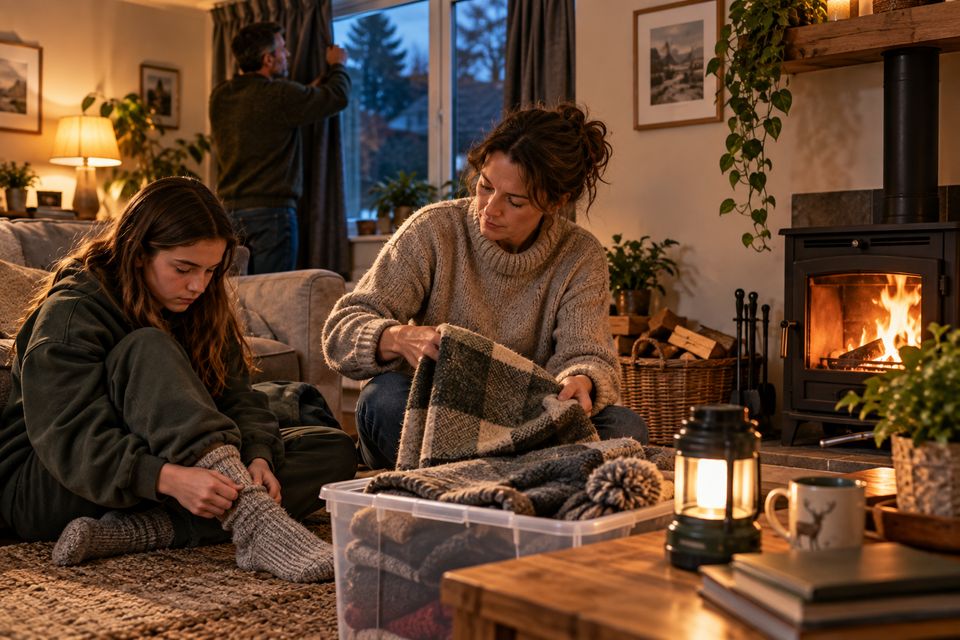
Keep your home usable
Knowing how your home is heated and who handles repairs gives you somewhere to start when something stops working. Think about warmth and rest at home, as well as somewhere suitable to stay if you have to leave.
Warmth, rest and a place to stay
Know how your home works
Heating and cooling rely on the building and its services. Some heating systems need electricity for controls or pumps, even when they use another fuel. Check with the landlord, building manager or provider if you’re unsure.
Keep people comfortable
Think about clothing, bedding and places to rest, including anyone who finds it difficult to move around. Insulation and draught control can matter too, but changes must respect the building’s ventilation needs.
Think about somewhere else to stay
If home becomes unusable, a spare bed with someone you know may be one option. Check that the place would work for access needs, caring responsibilities and pets rather than assuming it will.
Things a housing plan can miss
- A heating problem may need a landlord or building manager to arrange the repair.
- The warmest or coolest room may not be easy for everyone to reach.
- An alternative place to stay may be too far away or unable to meet someone’s needs.
Start with your own home
- Find the repair contacts for your home, including any shared heating or building services.
- Check that useful clothing and bedding are easy to reach, and discuss help anyone might need.
- Talk through a possible place to stay. Use current Met Office advice when preparing your home for severe weather.
When the weather changes your plans
- Extreme cold. Keeping people warm may become harder if heating is interrupted.
- Extreme heat. Think about where you could rest comfortably if your usual room becomes too hot.
- Gas supply disruption. Heating or hot water may stop working as usual.
Getting help beyond the front door
- Power & Energy
Heating controls, pumps and cooling equipment may need electricity.
- Mobility & Evacuation
Check how you would reach another place to stay.
Get the right help with heating
For a heating fault or changes to a fuel-burning appliance, use a qualified professional. If you’re thinking about temporary heating, follow the equipment’s instructions rather than improvising a way to use it.
Put it into practice
Sources and further advice
For more detail, use the guidance below. Check which part of the UK each source covers.
- Met Office — WeatherReady
UK weather preparedness. Source checked .