Household preparedness
Water & Sanitation
Imagine turning on the tap and getting nothing. You’d need water for drinks, but also for meals, handwashing and the toilet. Think through those uses separately: the amount you need, where you could keep it and whether you could carry it to where it’s needed.
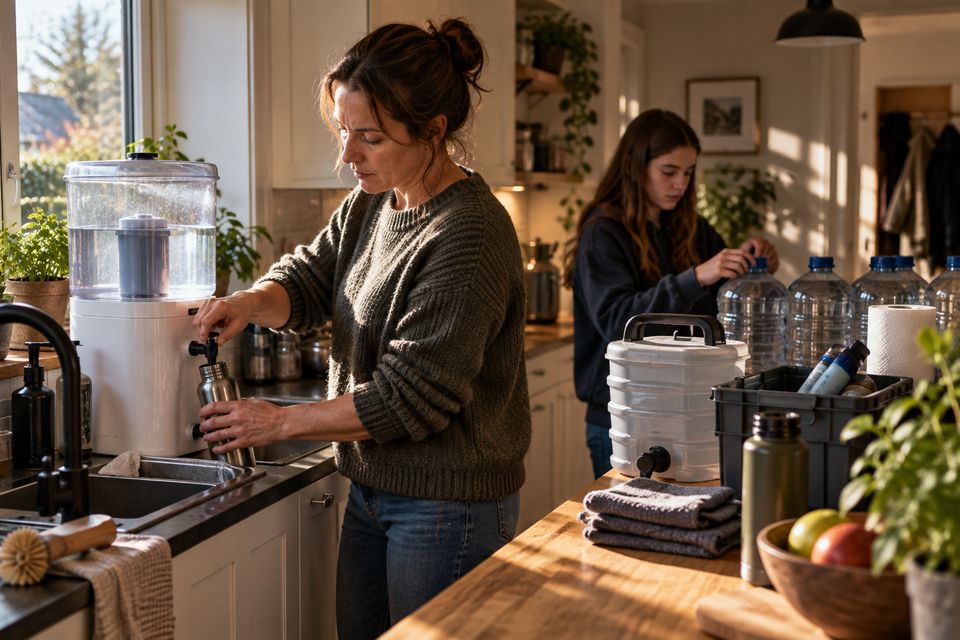
Keep everyday water uses in mind
Work out how you could get water for essential uses if the usual supply stopped. Any water you keep needs to be suitable for the job and easy to reach. Make sure you can receive and follow your provider’s advice about your own supply.
From the tap to the toilet
Getting water and keeping it accessible
Drinks are only part of the picture. Think about cooking, washing and anyone who needs help carrying water. A large container may be awkward to lift, and storage only helps if you can get to it.
Knowing what is safe to use
Water that looks clear is not necessarily safe to drink. Filtering out particles is different from treating water to reduce harmful germs. Follow your provider’s instructions rather than assuming a household filter will solve a problem with the supply.
Washing and toilet use
Work through a day without running water: washing hands, cleaning up after meals and using the toilet. Shared facilities and help with personal care may need particular thought.
What could make access difficult?
- A supply point may be nearby but difficult to reach without transport or help carrying water.
- Water stored at the back of a cupboard may be hard to reach or too heavy for the person who needs it.
- Advice to boil water can be mistaken for advice that applies to every water-quality problem.
A useful first check
- Keep your water provider’s incident number and update page somewhere easy to find.
- List the everyday jobs you use water for. Include pets and any care needs when thinking about an alternative supply.
- Read any local notice carefully. An instruction to boil water is different from an instruction to stop using it.
When your water supply changes
- Water outage. You may need another supply for drinking and cooking, as well as a way to manage washing and toilet use.
- Flood. Check local advice about water quality and drainage rather than judging by appearance.
Other things that need water
- Health & First Aid
Washing and regular care may need water even when you aren’t preparing a meal.
- Food & Cooking
Check how much water your usual meals need, including washing up.
Follow advice for your supply
If you receive a notice about your water, use the instructions from your provider or local authority. The Drinking Water Inspectorate explains boil-water notices, but the notice for your own supply is the one to follow.
Put it into practice
Sources and further advice
For more detail, use the guidance below. Check which part of the UK each source covers.
- Drinking Water Inspectorate — Receiving a Boil Water Notice
England and Wales; follow the instructions of your own water provider elsewhere. Source checked .