Household preparedness
Power & Energy
If the electricity went off tonight, what would you miss first? Perhaps a light on the stairs, a charged phone or the heating controls. Start with the things you rely on most. That gives you a useful starting point before looking at batteries or other equipment.
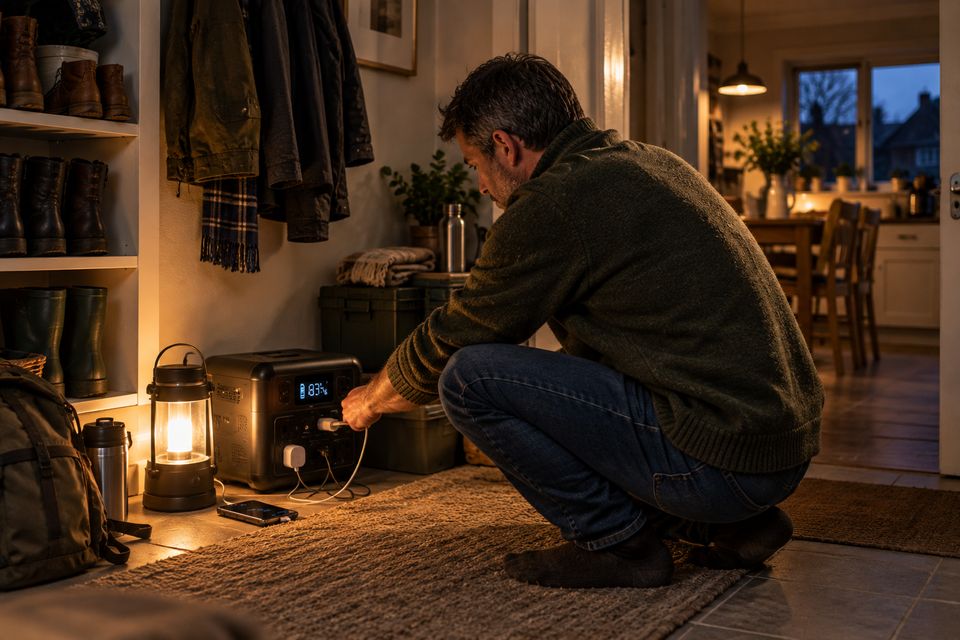
Keep the essentials going
Being able to find a working torch and reach the right help is a useful start. Your electricity network operator looks after local power lines; keep its contact details handy. If someone relies on powered medical equipment, discuss a power-cut plan with their care team or equipment provider.
What relies on electricity?
Work out what matters most
Walk through a normal evening at home. Think about lighting, charging, food in the fridge and anything needed for care. Some uses can wait; others need a plan of their own.
Understand your backup
A power bank for a mobile phone and a system that runs household appliances do very different jobs. Check what the equipment can actually power and how to use it safely. Ask the supplier or a qualified installer when you’re unsure.
Look beyond the sockets
Heating controls and some pumps need electricity too. Think about how a power cut would affect warmth and food storage, as well as the things you plug in yourself.
Easy things to overlook
- Your mobile phone might be your only torch, contact list and way to read updates. Losing its charge would affect all three.
- A spare battery is less useful if you can’t find the right cable or nobody knows how to use it.
- Equipment needed for care may need more support than an ordinary portable battery can provide.
Start with what you already have
- Find your torch and check it works. Keep it somewhere you can reach easily in the dark.
- Write down your network operator’s contact details so you don’t have to search online during a power cut.
- Ask your energy provider about extra support if you need it. Ofgem explains who can join a Priority Services Register in Great Britain.
When the lights go out
- Power cut. Lights, charging and other everyday tasks can stop together. Decide what you would want to keep doing first.
- Storm. Bad weather may make it harder to get help or reach somewhere else to stay.
Where power connects to daily life
- Communications & Information
A charged phone helps, but you also need a way to receive updates and reach people.
- Food & Cooking
Think about what happens to chilled and frozen food when the fridge loses power.
Before choosing equipment
Before choosing backup power, write down what you need it to run and ask about its limits. For medical equipment, agree a plan with the care team or equipment provider rather than relying on a general household setup.
Put it into practice
Put your arrangements on paper
- Essential Power-Needs Inventory
Identify the tasks that depend on electricity and the questions to settle with the people who can help.
Sources and further advice
For more detail, use the guidance below. Check which part of the UK each source covers.
- Ofgem — Join your supplier’s Priority Services Register
Great Britain energy customers; Northern Ireland arrangements differ. Source checked .