Household preparedness
Food & Cooking
What could you make for dinner if you couldn’t shop today, or if the cooker wasn’t working? Start with food you already eat and know how to prepare. A useful cupboard takes account of tastes, dietary needs and the energy and water needed to turn ingredients into a meal.
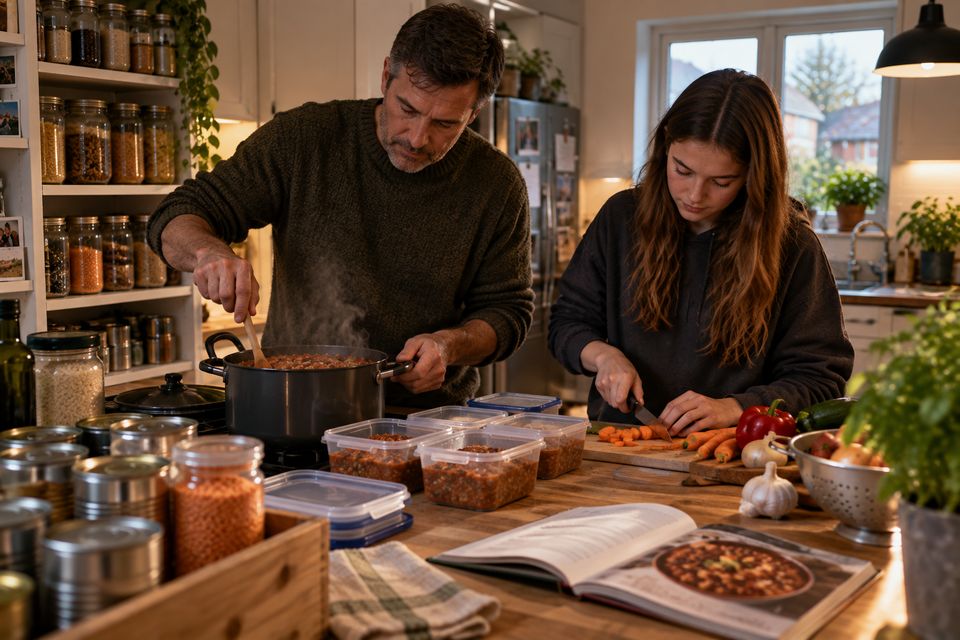
Keep familiar meals on the table
A useful food cupboard helps you put together meals you enjoy, including when shopping is difficult. Knowing what needs the fridge, what can be eaten without cooking and what needs using first makes those meals easier to plan.
From cupboard to plate
Think in meals
Look at what goes together, not just individual packets and tins. Include food that suits everyone’s dietary needs and check that the person preparing it can open the packaging.
Use what you store
Keep track of what is in the cupboard, fridge and freezer. Make older suitable items easy to find and use. Chilled and frozen food need different care from food normally kept at room temperature.
Check how you would cook
Some meals need a hob, an oven or plenty of water; others take less preparation. If you use an alternative cooker, follow its safety instructions. Don’t bring equipment intended only for outdoor use inside.
Where a meal plan can come unstuck
- A well-stocked freezer still relies on electricity.
- Food can be overlooked until it is no longer suitable to eat, especially when it is difficult to see or reach.
- A meal that suits most people may not suit someone with an allergy or another dietary need.
Take a look in your kitchen
- Choose a few meals you eat regularly and check what you already have for them.
- Put older suitable food where you’ll see it and check storage instructions and date labels as you go.
- Keep the Food Standards Agency’s power-cut advice easy to find so you can check what to do with affected chilled or frozen food.
When shopping or cooking is interrupted
- Power cut. The fridge and cooker may both be affected, so food safety and meal preparation need separate attention.
- Supply disruption. A missed delivery or reduced choice in the shops may mean adapting familiar meals.
What your kitchen relies on
- Power & Energy
Fridges and freezers depend on a working electricity supply.
- Water & Sanitation
Cooking and washing up can be difficult even when there is plenty of food.
Keep food safety part of the plan
After a power cut, use current food-safety advice before deciding what to keep or discard from the fridge or freezer. For everyday planning, choose food that fits your budget, storage space and the way you normally eat.
Put it into practice
Sources and further advice
For more detail, use the guidance below. Check which part of the UK each source covers.
- Food Standards Agency — Food safety in a power cut
Food safety guidance; consult Food Standards Scotland for local advice in Scotland. Source checked .