Household preparedness
Communications & Information
If your phone had no signal, how would you reach someone you care about? And where would you check what was happening? Staying in touch means thinking about both sides: sending a message and receiving information you can trust.
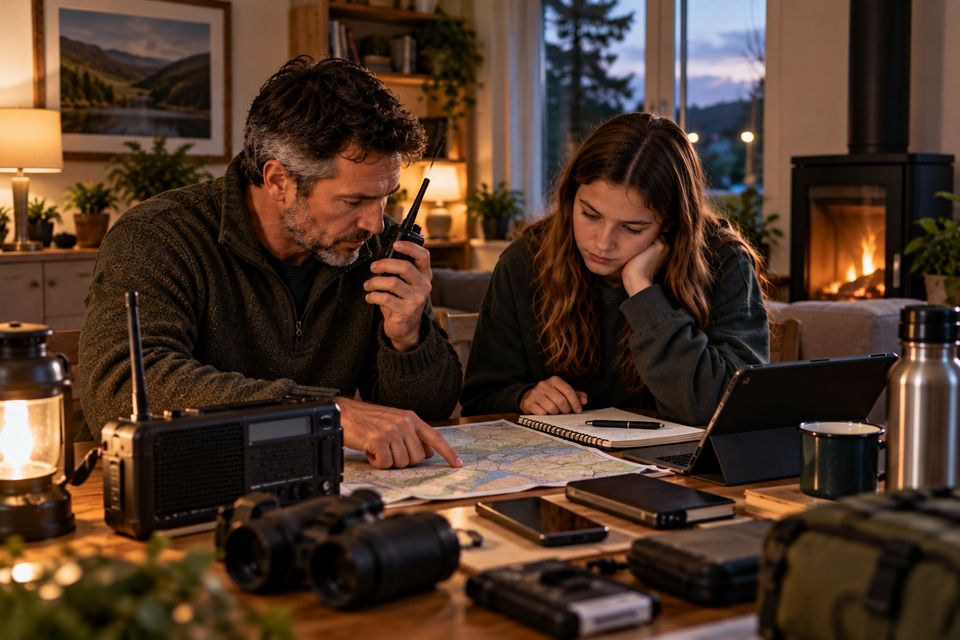
Stay in touch when the usual way fails
Agreeing how to make contact saves guesswork when you can’t get through. Keep important numbers somewhere you can reach without your phone, and know where to look for official local updates.
Messages, updates and useful information
Have another way to make contact
A different messaging app may still need the same phone and internet connection. Talk through what each person can actually use, including anyone who does not have a smartphone.
Know where the news comes from
Save useful official sources before you need them. Radio broadcasts and Emergency Alerts can help you receive information, but alerts need a compatible phone or tablet within range of a working 4G or 5G mast.
Keep useful information offline
A paper contact list can help if your phone is lost. A copy saved for use without internet access is useful when you still have the device but no connection. Include charging in your plan, so the method you choose is ready to use.
Where communication can break down
- All your important numbers may be on a single phone.
- Two apps can appear to offer a backup while relying on exactly the same connection.
- A forwarded message may describe an old event or leave out where the information came from.
Make contact easier
- Agree which contact method to try first and what to do if you can’t get through.
- Keep a few essential numbers somewhere accessible without your phone. Share personal details only with people who need them.
- Check the government’s Emergency Alerts information and find the official local sources you would use for updates.
When a connection is lost
- Telecommunications outage. Calls, messages or online updates may not work as usual.
- Power cut. A charged phone is useful, but the network and any equipment at home also need to be working.
Help your contact plan work
- Planning & Continuity
Agreeing when and how to contact each other turns a list of numbers into something useful.
- Power & Energy
Think about keeping the devices you rely on charged.
Check before passing it on
Before acting on a forwarded message, look for the original source and check when it was published. For an incident affecting your area, follow current information from the relevant authority or emergency service.
Put it into practice
Put your arrangements on paper
- Essential Contacts Sheet
Keep a few important contacts readable without a phone, internet connection or cloud address book.
Sources and further advice
For more detail, use the guidance below. Check which part of the UK each source covers.
- UK Government — How emergency alerts work
UK mobile Emergency Alerts. Source checked .