How-to guide
Warmth & ShelterPrepare your home for hot weather
Plan a cooler place at home, keep everyday essentials usable and agree help before hot weather makes ordinary tasks harder.
For people getting an ordinary UK home ready for hot weather, including renters and households with limited space, money or help.
Reviewed · Updated
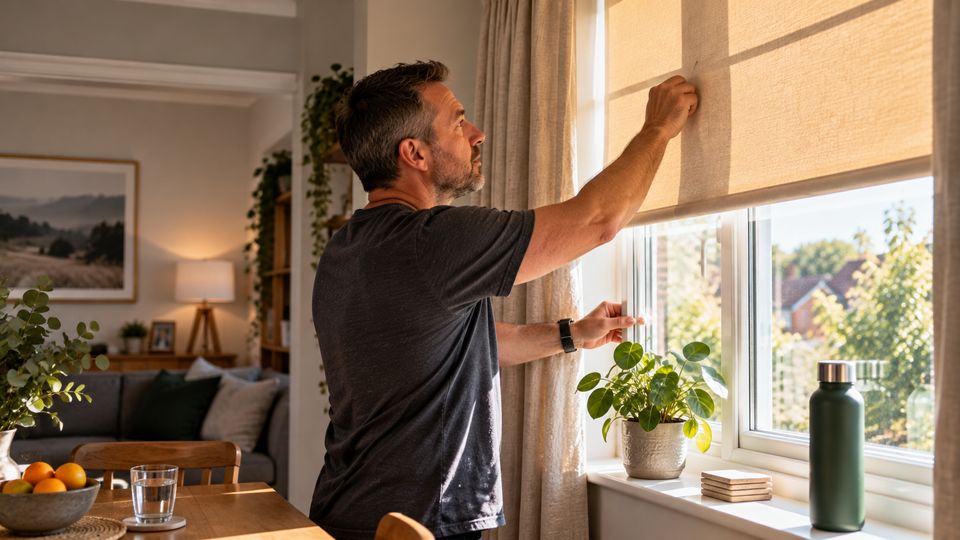
Make a few arrangements before it gets hot
- Check the local forecast and official advice. Met Office weather warnings cover the UK; UKHSA Heat-Health Alerts apply to England. You do not need to wait for an alert to take sensible precautions.
- Notice which rooms get direct sun and which are easier to keep cool. Check that existing blinds or curtains work and that windows can be used safely. If you rent and need repairs or alterations, discuss them with your landlord or housing provider.
- Check your fridge and any fan you already use. Plan who could help with drinks, shopping or reaching a cooler place. Ask what would be useful rather than assuming someone needs the same help as you.
Shade sunny windows and respond to changing conditions
Close blinds or curtains at windows receiving direct sunlight, and use outside shading if you already have it. When the air outside is hotter than indoors, opening a window may bring more heat in. When outside air becomes cooler, opening windows can help air move through the home.
Only open windows where it is safe and secure to do so. Keep window restrictors and your building’s fire precautions in place, particularly around children or anyone at risk of falling. If there is smoke or poor air outside, follow current local advice rather than opening windows simply to cool the room.
Switch off lights and equipment you are not using, and choose cooler times for cooking where practical. Keep essential equipment and refrigeration running. Keep fitted ventilation working as instructed rather than blocking it or switching it off just to keep hot air out.
Choose somewhere you can comfortably reach
Use a cooler part of your home if you can, including for sleeping. Check it again later: a room shaded in the morning may be hot by afternoon. At night, open windows only if the air outside is cooler and it is safe to leave them open.
If home stays too hot, look for a nearby cooler place, such as a public building. Check whether it will be open, cool and accessible, and how to get there safely. Avoid a long or difficult journey in the hottest conditions. Arrange help beforehand if you may need it.
Sources for this section
Keep drinks, food and medicines within reach
Keep drinking water easy to reach and make time for regular drinks. If your care team has given you a fluid limit, ask them about hot-weather arrangements; do not replace their advice with a general drinking target. Use the water-supply guide to plan for an interruption to your usual supply.
Check that your fridge is keeping food cold and follow food labels. FSA guidance recommends 0–5°C for normal fridge use; Food Standards Scotland likewise advises 5°C or lower. During a power cut, keep the fridge door closed as much as possible and follow current food-safety advice rather than relying on a fixed number of hours — how quickly food warms can vary. The food guide covers the wider arrangements.
Check each medicine’s storage instructions before hot weather. Keep medicines away from hot cars and direct sunlight. Ask a pharmacist if you cannot meet the instructions or think a medicine has been affected by heat. Do not put every medicine in the fridge or change how you take it because of this guide. Use the medicines and care guide to plan how to keep essential care going.
Agree help and a fallback
Think about anyone who may find it harder to keep cool, recognise that they are becoming unwell, get a drink or move somewhere cooler. This can include older people, babies and young children, and people with some health, disability or mobility needs. Agree how to check in with them. Ask before making arrangements, and keep personal health details out of shared household notes.
Give pets fresh drinking water and a cool, shaded place to rest. Never leave them in a hot parked car. Contact a vet if you are worried that an animal is suffering from heatstroke.
Think about what you would do if powered cooling or other essential equipment stopped. Use the power-cut guide and Essential Power-Needs Inventory to identify questions for your provider or care team. Keep agreed arrangements with your household plan; do not assume someone else has already organised a fallback.
Check the arrangements you will actually use
Use the boxes while you read, or tick them on a printed copy. This site doesn't save your ticks.
Sources and review
- Written by
- Resilient UK
- Reviewed by
- Resilient UK
- Applies to
- United Kingdom
- Last reviewed
- Last updated
Reviewed by Resilient UK means institutional editorial review. It does not imply medical, clinical, legal, engineering, fire-safety or other specialist endorsement.
- Beat the heat: keep cool at home checklist
Source accessed
- Beat the heat: staying safe in hot weather
Source accessed
- How to stay safe in hot weather
Source accessed
- What is a heatwave?
Source accessed
- Electrical Safety Advice for Electric Fans
Source accessed
- Warning over fan cooling hacks
Source accessed
- Protecting medicines during hot weather
Source accessed
- Restricting your fluid intake
Source accessed
- Heat exhaustion and heatstroke
Source accessed
- Heatstroke and heat illness
Source accessed
- Heat exhaustion and heatstroke — NHS 111 Wales
Source accessed
- Hot weather advice
Source accessed
- GP out of hours service
Source accessed
- How to chill, freeze and defrost food safely
Source accessed
- Food safety during a power cut
Source accessed
- Water supply interruptions or outages
Source accessed
- Power cuts
Source accessed
- Make an emergency plan for your home
Source accessed